
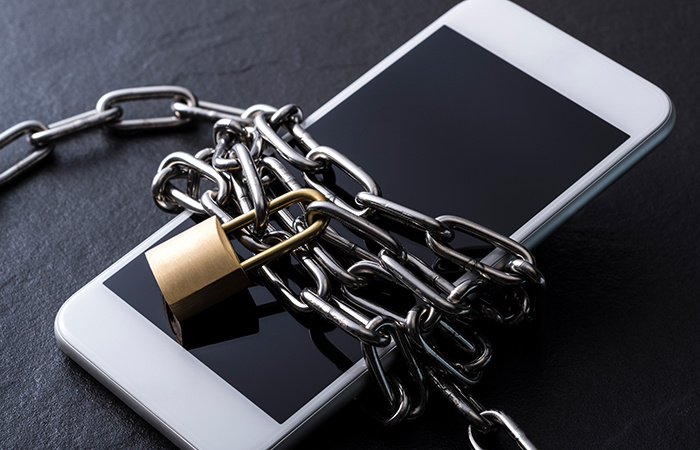
As most mobile phones become "smart" phones, the consequences of an insecure device can be much greater than a long-distance bill.
These days, a phone is no longer just a phone. For most of us, it's an extension of ourselves - a device tightly integrated with just about every personal and professional aspect of our lives.
While that makes our phones extremely valuable, it also makes us potentially vulnerable. Most of our phones are a treasure trove of sensitive information. That information is very attractive to online thieves - it can be used to access financial accounts and steal your data for identity theft. It can even be used in extortion scams.
Anyone using their phone for day-to-day tasks can benefit from enhanced protection. So, let's review the basics of better smartphone security.
Shopping? Follow Smart Security Practices
Shopping with your smartphone is great. You can make retail purchases with a click or two, often with data like your address and credit card number automatically entered from your device (or the cloud).
To minimize the risk to your data, it's essential to ensure that you're patronizing established vendors with "best practice" security protocols. For example, if the website's URL starts with "http" versus "https," your data isn't encrypted - a risk that no legitimate vendor would expect customers to take. And if you're considering a purchase from a vendor, you've never heard of before, at the very least, search for more information on the company first. Remember, the ads you may see on Facebook, for example, aren't necessarily vetted by Facebook. So extra diligence may be warranted.
Some vendors also allow you to set up multifactor authentication for site login. This extra step sends a code to your phone or email address that you must verify before enabling login, further securing your account and data.
Use Secure Networks
Not all WiFi networks are created equal. For example, networks in public spaces will always be less safe than a well-protected private network. Not only may some public networks not be encrypted, but the open nature of these networks means that malicious actors can connect to the same network as you, increasing the risk of intercepting your data or launching attacks.
And some public WiFi may not be what it seems. Identity thieves have been known to "spoof" public networks - to create fake networks with similar names to snare unsuspecting smartphone owners. If you log on to one of these bogus networks, you may put your data at risk.
Be Vigilant About Apps
Apps from trusted, well-known developers are usually no cause for worry. But apps that don't meet those standards should be given substantial scrutiny. For example, suppose the app asks for too much access or information (think access to your contacts, camera, or accessibility settings). In that case, you may want to consider an alternative.
It's also a good idea to keep your phone's operating system up to date. Some security issues are not the result of a specific app but a vulnerability in the operating system itself.
Password and Biometrically Protect Your Phone
There are various ways to secure your device itself. Of course, you can use a standard four- or six-digit numeric password but supplementing that password with a face or fingerprint ID offers even more protection.
Whatever options your phone offers, use at least one of them. Sure, it's a minor pain point to enter your password repeatedly, yet the security it offers is well worth it.
Use Phone Tracking
Losing your phone is a nightmare on multiple levels. There's the financial cost, plus, if your phone isn't backed up, your photos and other data. Most worrying of all, however, is that others may be able to access your device.
If your phone is lost, tracking down its precise location is incredibly useful. Find My iPhone and its Android-based equivalents are very effective at finding lost devices. And if your device can't be found, remotely wiping it also protects your security.
The Bottom Line
There are now billions of smartphones in circulation, making them extraordinarily tempting targets for hackers and identity thieves. That's why it's critical that you protect your phone with the same care you give your laptop or home computer. Do that, and you can shop, text, and talk with as much security as possible.